Mechanical snap disc cutoff
A 205F auto-reset high-temperature snap disc physically interrupts heater power outside the controller.

American-made heated stripping equipment
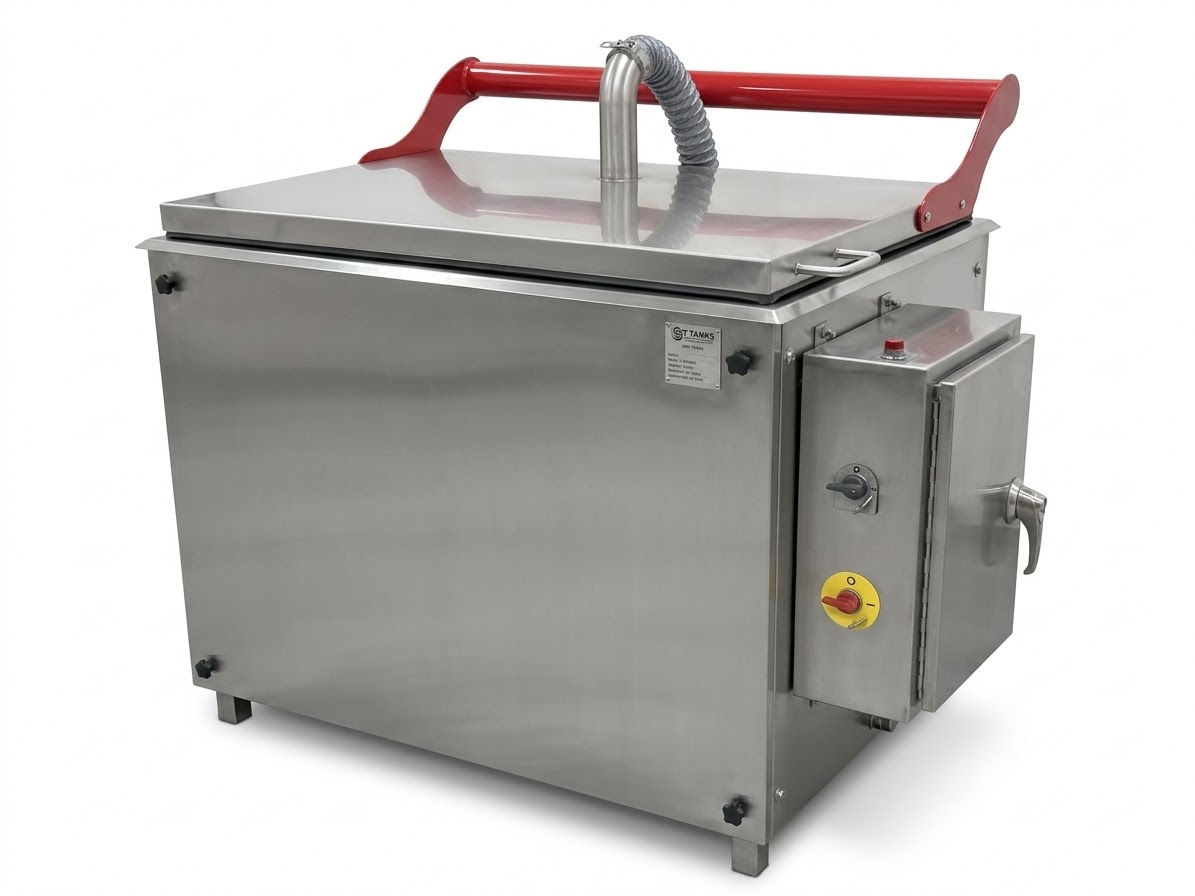
A 7-gauge stainless heated stripping system built around redundant high-temperature protection, hardwired fault detection, vapor-resistant controls, and faster sludge service.
Built for chemical stripping shops
The manual reads like a product designed from shop experience: protect operators from heat and chemistry, keep electronics alive in corrosive vapor, make electrical faults visible, and remove sludge without turning maintenance into a half-day hot chemical job.
The control system can remain available for status and programming while heater power is isolated for service.
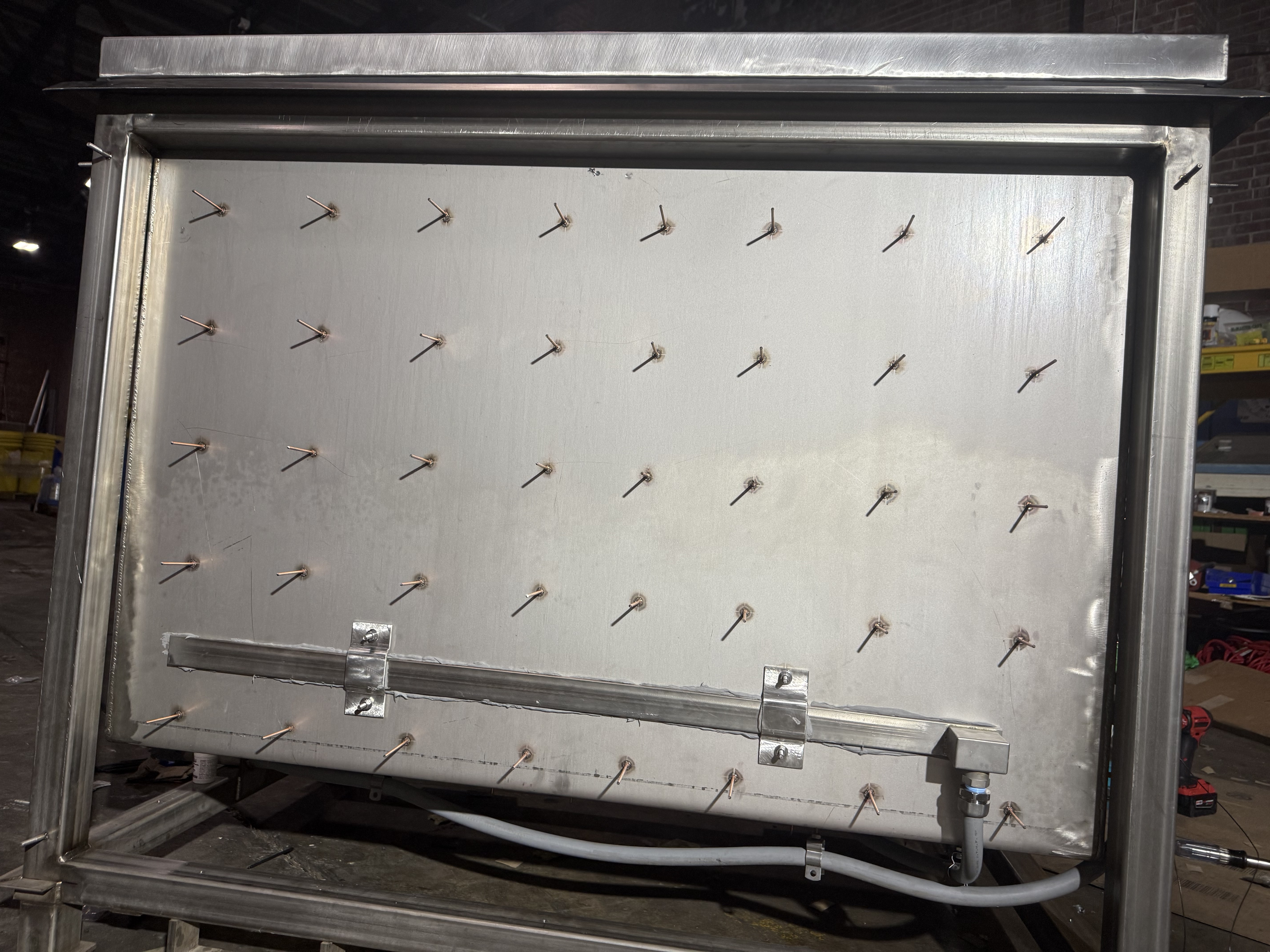
Dual 100K NTC thermistors read through the 7-gauge stainless wall and give the controller fallback visibility.
A 1-inch maintenance drain and 2-inch sludge drain separate liquid removal from accumulated coating residue removal.
Post-production passivation
After fabrication, each tank goes through a full-volume citric acid passivation process built to protect the interior stainless surface before it ever sees caustic, NMP, MEA, KOH, or other aggressive stripping chemistry.
This is not a quick rinse or a partial treatment. The tank is filled to 95 percent capacity with a 4 percent citric acid solution and heated to 200F, creating a prolonged full-immersion soak across the welds, corners, seams, and interior wall surfaces.
Redundant safety
The WL4 operates at 180F and uses controller logic, hardwired protection, and vapor management together. Heated solvent-based strippers can release vapors and condensate, so safety has to include both temperature control and a clear path for vapor and steam to leave the tank.
A 205F auto-reset high-temperature snap disc physically interrupts heater power outside the controller.
The Genesis Wizard WHMC controller manages PID control, scheduling, and high-temperature alarm behavior.
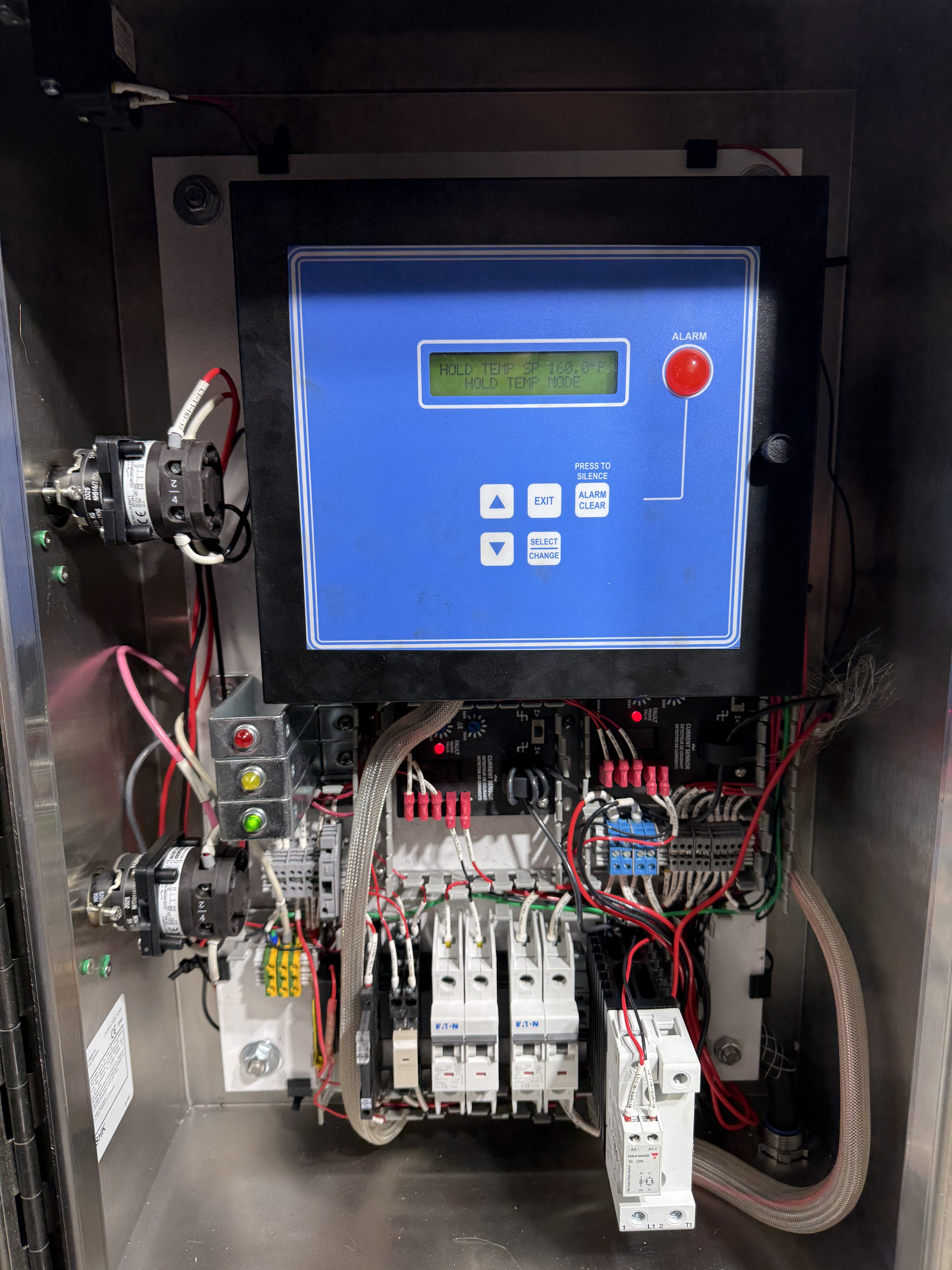
Relay logic detects heater current when heat is not being called and flashes the red fault indicator.
The center lid vent gives heated solvent vapors, steam, and condensate a controlled exhaust path, helping keep fumes away from operators and reducing condensate buildup around the lid opening.
Drip guard condensate return
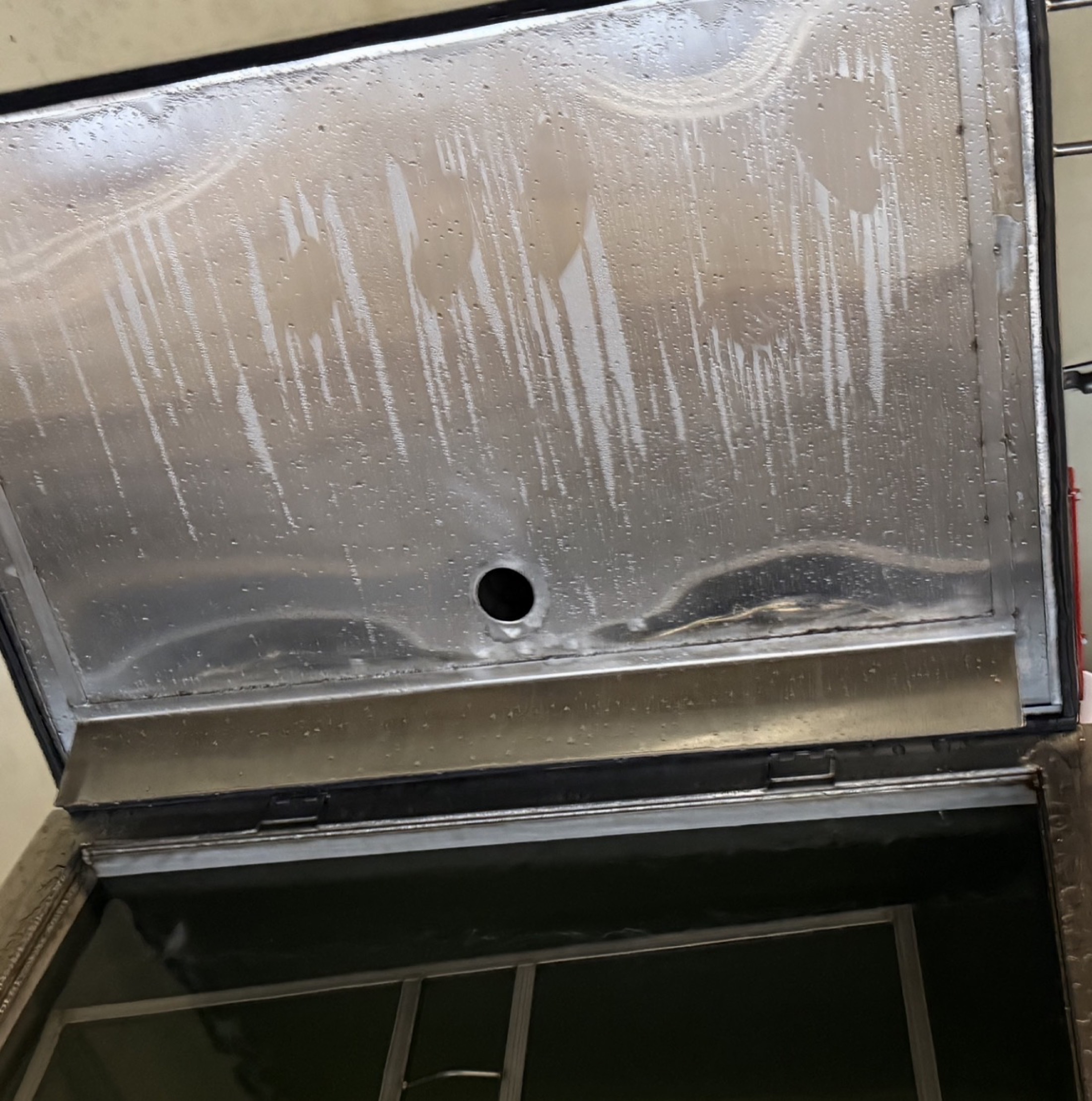
When the WL4 runs with the lid closed, heated solvent-based strippers can build condensate on the underside of the lid. The stainless drip guard flap sits below the lid edge and redirects that liquid back into the tank, reducing operator exposure, chemical waste, and cleanup around the work area.
Operator diagnostics
The LED logic translates heater current and heat-call status into a simple field-readable system, including degraded heater operation and dangerous stuck-SSR behavior.
Heat is called and both heaters are drawing full current.
Heat is called, but current indicates only one heater is operating.
Heat is called, but no heater current is detected.
No heat call and no heater current. The tank is at setpoint.
No heat call, but heater current is present. The SSR may be stuck closed.
Industrial construction
The WL4 uses NEMA 4X stainless enclosures, liquid-tight fittings, vapor-tight flexible metal conduit, high-temperature ceramic terminals, and insulation selected for chemical environments.
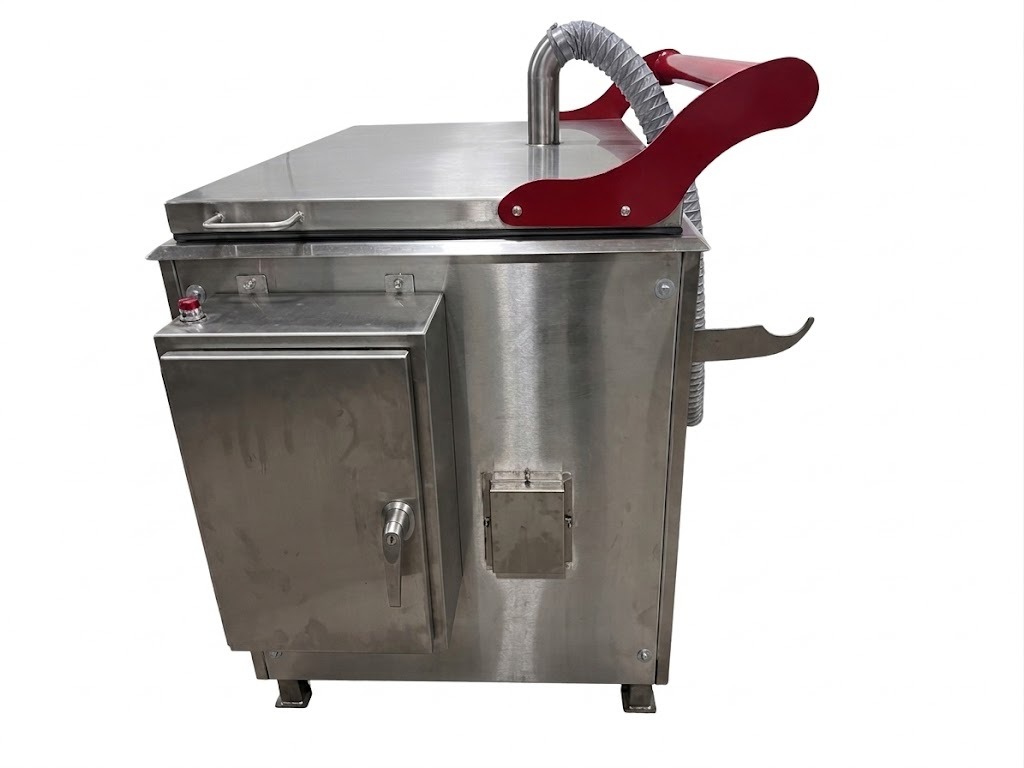
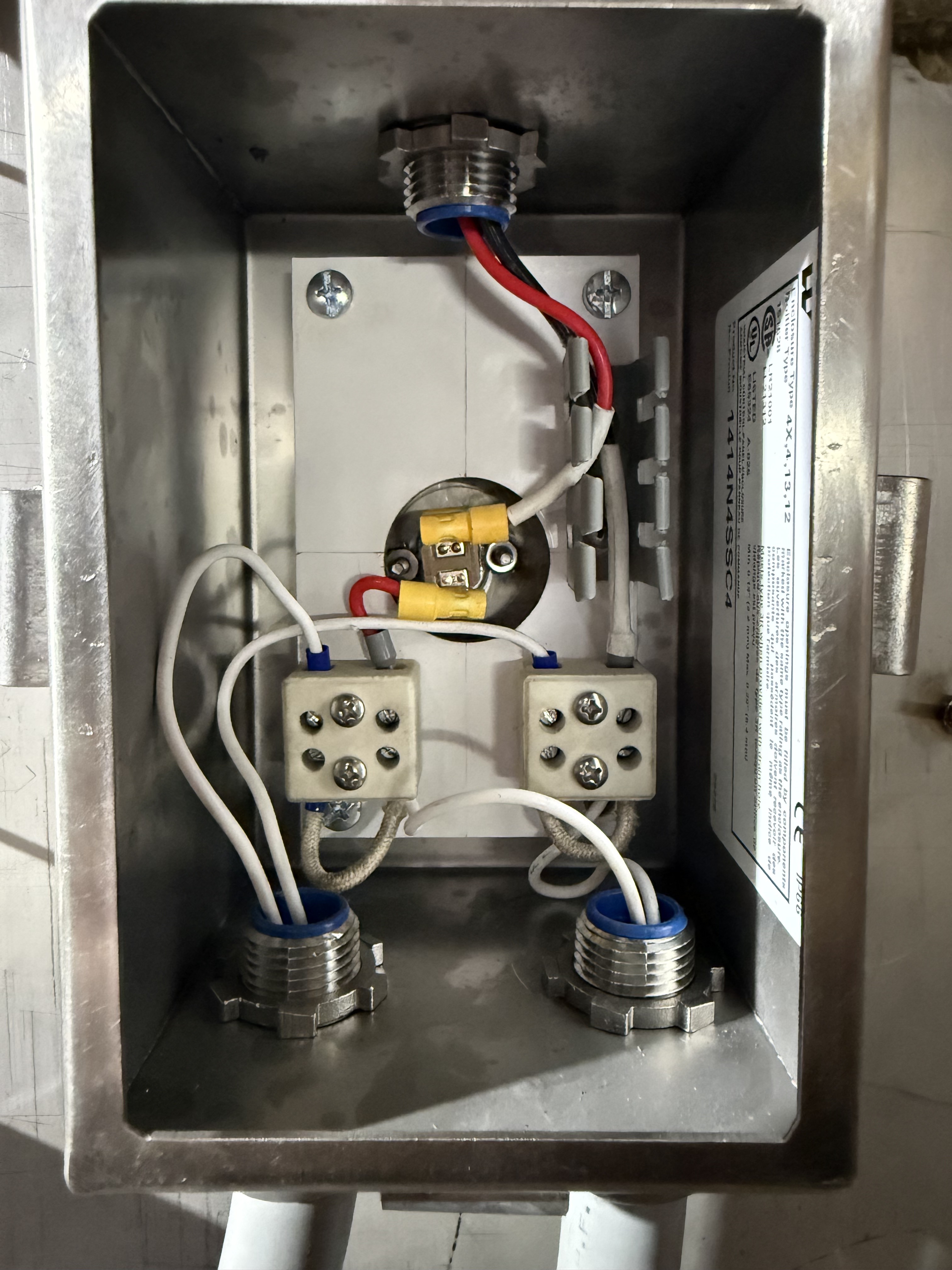
The side panel provides service access to the snap-disc enclosure mounted beneath it. Inside, high-temperature heater leads transition through ceramic terminal blocks, with a 205F auto-reset high-temperature cutoff in a NEMA 4X stainless enclosure.
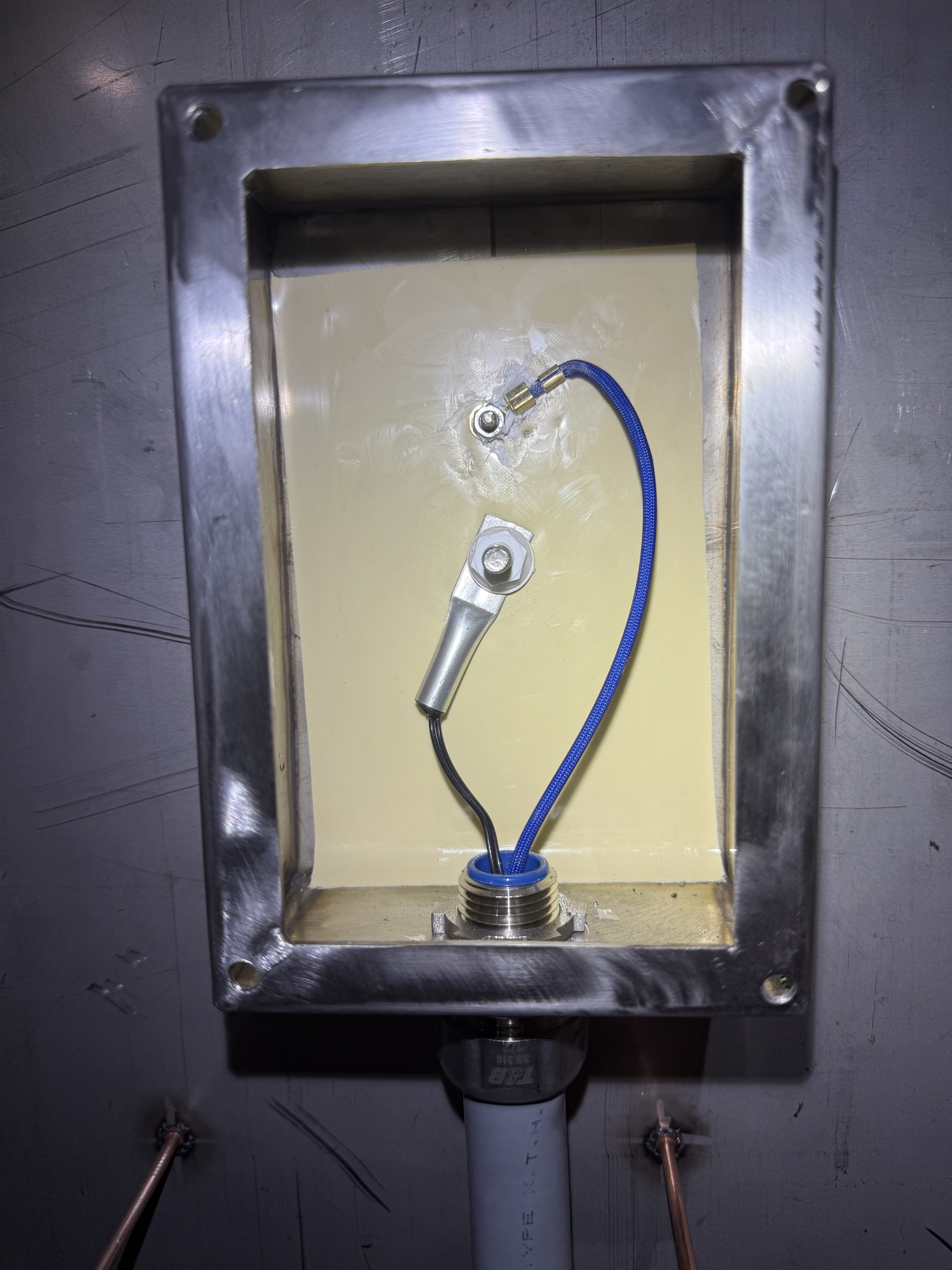
Dual-metal probes provide industry-best operational temperature redundancy: nickel-coated copper sits directly against the tank, while aluminum is galvanically separated from the stainless wall.
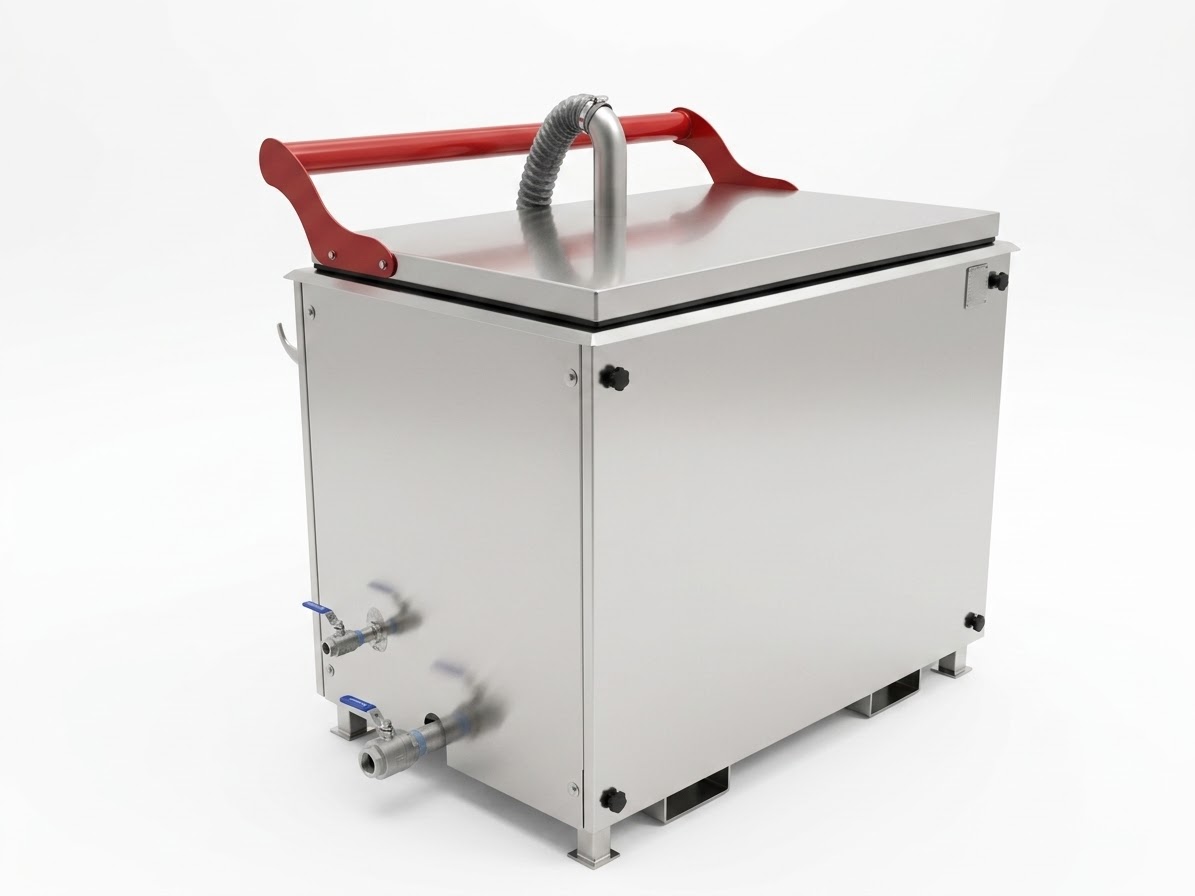
The 1-inch liquid drain and 2-inch sludge drain make monthly service faster and safer.
Technical snapshot
Open the WL4 Heated Strip Tank user manual for safety information, setup requirements, operation, troubleshooting, wiring, and maintenance records.
See the difference
The WL4 is designed for how chemical stripping actually works: heated chemistry, sludge, vapor, electrical faults, and operators who need fast, visible answers.
Marked rows are critical safety differentiators.
Quote the right tank
A better tank quote starts with chemistry, coating type, throughput, ventilation, and maintenance expectations.